Every year, hundreds of billions of dollars flow across borders as migrants and diaspora communities send money back home. In 2024 alone, remittances to low- and middle-income countries reached an estimated $685 billion, surpassing the total value of foreign aid. For many households in developing countries, these transfers are lifelines that support food security, education, healthcare, and economic resilience.
Given their importance, governments worldwide have attempted to design policies to capture more remittances, improve transfer channels, and encourage diaspora engagement. Yet the results are far from uniform. Some nations have seen increased inflows after implementing such policies, while others have found that broader economic and political conditions override policy interventions.
This analysis explores the realities of diaspora remittances, how governments try to maximize them, and why the outcomes vary significantly.
Remittances come directly from migrants’ personal earnings and operate in the same way as other household expenditures. They represent ongoing commitments to families and communities, reflecting strong emotional, cultural, and financial ties.
In countries such as Nepal, Tajikistan, Nicaragua, Samoa, Bermuda, and Honduras, remittances amounted to more than one-quarter of GDP in 2024. These inflows stabilize economies and provide buffers against food insecurity and rising costs.
Surveys across Latin America and the Caribbean show that up to 80% of remittances are spent on essentials— food, transportation, utilities, and healthcare. In northern Central America, food alone accounts for the largest share.
Although remittances come from individuals’ private earnings, some sending-country governments view outflows as economic leakage. This has occasionally led to restrictions or taxes on international transfers.
The United States has sometimes implemented such measures—for example, restrictions on family remittances to Cuba and a newly approved 1% tax on outgoing transfers taking effect in 2026.
Such interventions can influence diaspora remittance behavior, potentially reducing amounts sent or shifting flows to alternative channels.
Governments typically rely on two major policy approaches: economic measures and soft engagement strategies.
While harder to measure, these strategies strengthen long-term diaspora connections that indirectly support remittance flows.
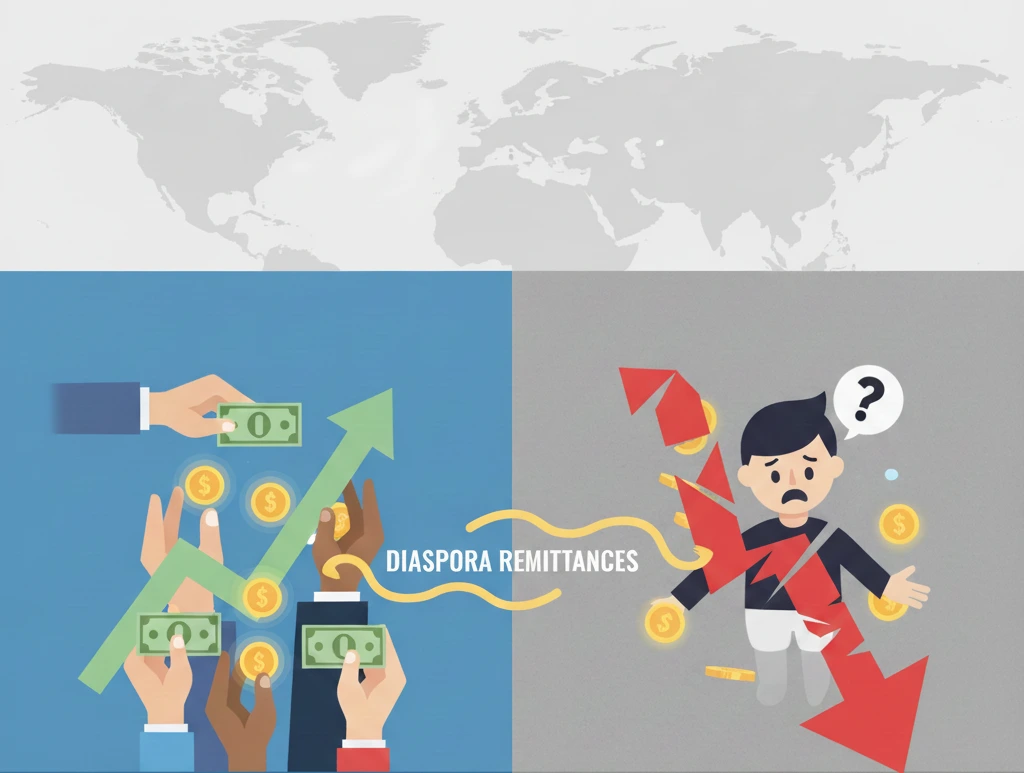
Evidence shows a link—though the relationship varies. Research from 1996–2022 shows that countries with formal diaspora engagement policies received 2.2 percentage points more remittances (as a share of GDP) than those without.
An IOM study found that countries with dedicated diaspora strategies received more than double the remittances (as a share of GDP).
Before Nepal introduced its first diaspora policy in 2008, remittances averaged under 9% of GDP. In the decade after, inflows averaged 24%, highlighting significant though not solely policy-driven growth.
However, strong inflows do not always depend on policy. The Philippines and El Salvador receive high remittances due to cultural norms, migration networks, and global labor presence rather than formal policy frameworks.
Multiple external factors influence diaspora behavior, sometimes overpowering policy efforts:
For example, increased immigration enforcement in the U.S. during 2025 led to a 6% decline in remittances to Mexico, while some migrants increased transfers to Central America to secure their families before possible deportation.
Even when remittance policies show mixed results, broader diaspora engagement creates long-term national value.
Remittances benefit both host and origin countries.
For Host Countries:
For Origin Countries:
Remittances are powerful forces shaping global development. While policy plays a role, diaspora behavior ultimately reflects economic realities, migration patterns, family obligations, and emotional ties.
When well-designed, diaspora policies can enhance engagement, attract investment, and strengthen long-term national development. Remittances, when optimized, become more than financial transfers—they become drivers of stability, resilience, and human connection across borders.
Want to see how a ready-made platform can accelerate your growth?
Book a demo or consult with us at RemitSo today to see how our platform can power your growth.